Proper wound care is essential for preventing complications, promoting healing, and restoring function after injury or surgery. At All American Orthopedic & Sports Medicine Institute, our fellowship-trained orthopedic surgeons provide comprehensive wound care for acute and post-surgical wounds using personalized treatment plans. Serving Houston, Clear Lake, Lake Jackson, and Kingwood, we are committed to supporting optimal healing, reducing the risk of infection, and helping patients recover safely and confidently.
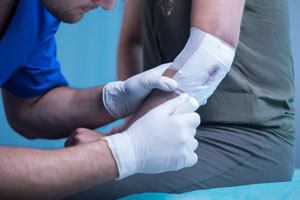
What is Wound Care?
Wound care is the assessment, management, and treatment of various types of tissue injuries to promote optimal healing of the injured tissues and prevent complications.
Types of wounds
The various types of wounds can be classified as:
Acute Wounds:
- Incisional wounds
- Abrasions
- Lacerations
Chronic Wounds:
- Pressure ulcers
- Diabetic ulcers
- Venous ulcers
- Arterial ulcers
Surgical Wounds:
- Clean surgical wounds
- Contaminated surgical wounds
- Infected surgical wounds
Principles of Wound Assessment
Wound assessment is important for proper treatment and includes assessing:
- Location, size, and depth of the wound
- Presence of undermining or tunneling
- Appearance of wound edges and surrounding tissue
- Amount and characteristic of wound exudate
- Signs of infection or inflammation
- Assessment of pain
Essential Components of Wound Care
The steps in wound care are:
- Wound Irrigation: This involves use of sterile saline solution or wound cleanser to gently irrigate the area to remove debris and bacteria.
- Debridement: This is the removal of necrotic tissue, slough, and foreign material using techniques such as sharp debridement, enzymatic debridement, autolytic debridement, and mechanical debridement.
- Dressing Application: Dressing are chosen based on wound characteristics, exudate level, and patient preferences. Types of dressings include hydrocolloids, foams, alginates, hydrogels, and antimicrobial dressings
- Post Dressing Management: This involves regular monitoring for signs of infection, ensuring dressings remain intact and effective, and adjusting care as the wound's condition evolves over time.
Advanced Wound Care Techniques
Some of the wound care techniques includes:
- Negative Pressure Wound Therapy (NPWT): This technique involves the application of controlled negative pressure to promote wound healing. It is used for treatment of complex wounds with high exudate levels or inadequate perfusion.
- Biological Dressings: Use of biologic materials such as skin substitutes or growth factors to promote tissue regeneration is suitable for non-healing or chronic wounds with impaired healing mechanisms.
- Hyperbaric Oxygen Therapy (HBOT): This techniques involves administration of oxygen at increased atmospheric pressure to enhance wound healing. It is beneficial for certain types of wounds, including diabetic ulcers and compromised flaps or grafts.
Stages of Wound Healing
The signs of healing indicate that the body is successfully repairing the skin tissue. They are:
- Hemostasis: Immediately after an injury, the body works to stop the bleeding through clotting.
- Inflammation: The wound may become red, swollen, and warm as the body's immune response kicks in to clean the area.
- Proliferation: New tissue, known as granulation tissue, forms as the body rebuilds the wound area with collagen and other cells.
- Maturation: The final stage where the wound fully closes and strengthens. The scar tissue overlying the wound may change in appearance over time.
Wound Care Follow-Up Visits
Wound care follow-up visits are crucial for monitoring healing progress, preventing complications, and ensuring proper treatment adherence. During these appointments, your healthcare provider will assess the wound's appearance, measure healing rates, and may adjust treatment plans based on the wound's response to current therapies.
Why Choose All American Orthopedic Surgeons for Wound Care in Houston, Lake Jackson & Kingwood?
Proper wound management is an important part of orthopedic recovery. Whether you're healing after surgery, recovering from a fracture, or managing a traumatic injury, timely wound care helps reduce the risk of infection, supports healthy tissue healing, and promotes a successful recovery. At All American Orthopedic & Sports Medicine Institute, our fellowship-trained orthopedic surgeons provide comprehensive wound care tailored to each patient's condition, medical history, and healing goals.
Patients choose our orthopedic team because we offer:
- Fellowship-trained orthopedic surgeons experienced in post-surgical and orthopedic wound management
- Comprehensive wound evaluations and ongoing monitoring throughout the healing process
- Personalized treatment plans based on the type, size, and severity of the wound
- Advanced wound care techniques designed to promote healing and reduce complications
- Expert postoperative care following orthopedic surgery and fracture treatment
- Coordinated rehabilitation to support safe recovery and restore function
- Convenient office locations in Houston (Clear Lake), Lake Jackson, and Kingwood
Our goal is to promote healthy wound healing, minimize the risk of complications, relieve discomfort, and help you return to your normal activities as safely and efficiently as possible.
Wound Care FAQs
Why is proper wound care important after orthopedic surgery?
Proper wound care helps reduce the risk of infection, supports healthy tissue healing, protects surgical incisions, and contributes to a successful recovery. Following your orthopedic surgeon's wound care instructions is an important part of the healing process.
What types of wounds do orthopedic surgeons treat?
Orthopedic surgeons commonly manage surgical incisions, traumatic wounds associated with fractures, soft tissue injuries, lacerations, and wounds resulting from orthopedic procedures or musculoskeletal injuries.
How should I care for my incision at home?
Your orthopedic surgeon will provide detailed instructions based on your procedure. This may include keeping the incision clean and dry, changing dressings as directed, avoiding excessive moisture, and monitoring for signs of infection.
What are the signs of a wound infection?
Signs of infection may include increasing redness, swelling, warmth around the wound, drainage with an unpleasant odor, fever, worsening pain, or separation of the incision. Contact your orthopedic provider promptly if you notice any of these symptoms.
How long does it take for an orthopedic wound to heal?
Healing time depends on the type of injury or surgery, your overall health, and your body's natural healing process. Many surgical incisions heal within several weeks, while more complex wounds may require additional time and follow-up care.
Will I need follow-up appointments?
Yes. Follow-up visits allow your orthopedic surgeon to evaluate wound healing, remove sutures or staples when appropriate, monitor for complications, and ensure your recovery is progressing as expected.
Can medical conditions affect wound healing?
Yes. Conditions such as diabetes, poor circulation, smoking, and certain medications may slow wound healing. Your orthopedic team will consider these factors when developing your treatment plan and may recommend additional measures to support recovery.
Support Your Recovery with Expert Wound Care at All American Orthopedic & Sports Medicine Institute
Whether you're recovering from orthopedic surgery or healing after an injury, expert wound care plays a vital role in achieving the best possible outcome. The experienced team at All American Orthopedic & Sports Medicine Institute provides comprehensive wound management and postoperative care to promote healing, reduce complications, and support a safe recovery.
With convenient locations in Houston (Clear Lake), Lake Jackson, and Kingwood, expert orthopedic care is always close to home. Contact All American Orthopedic & Sports Medicine Institute today to schedule your follow-up appointment or consultation and receive personalized wound care designed to help you heal with confidence.