When orthopedic pain or injury limits your mobility, expert surgical care can help restore your quality of life. At All American Orthopedic & Sports Medicine Institute, our fellowship-trained orthopedic surgeons provide advanced orthopedic surgery for a wide range of bone, joint, muscle, tendon, and ligament conditions. Serving Houston, Clear Lake, Lake Jackson, and Kingwood, we deliver personalized treatment plans focused on relieving pain, restoring function, and helping you return to an active lifestyle.
What is Orthopedic Surgery?
Orthopedic Surgery, also commonly referred to as Orthopedics, is a branch of surgery that deals with the treatment of the musculoskeletal system, including bones, joints, muscles, ligaments, tendons, nerves, and even the skin. A person who specializes in Orthopedic Surgery is known as an Orthopedic Surgeon or Orthopedist.
An orthopedic surgeon or orthopedist specializes in the diagnosis and treatment of musculoskeletal disorders. He or she uses both non-surgical and surgical methods of treatment to provide relief to individuals suffering from injuries, fractures, infections, degenerative diseases, and other health issues that affect the musculoskeletal system.
What Education and Training is Involved with Orthopedic Surgery?
To become an orthopedic surgeon, an individual must complete:
- Four years of study in a college or university
- Four years of study in medical school
- Five years of training in an orthopedic residency
- Obtain a medical license and optional board certification
- One or more additional years of fellowship training in one of the subspecialty areas
What are the Subspecialties of Orthopedic Surgery?
Although orthopedic surgeons are familiar with all aspects of the musculoskeletal system, many orthopedists specialize in certain areas, such as:
- Knee Replacement and Reconstruction
- Hip Replacement and Reconstruction
- Hand and Wrist
- Foot and Ankle
- Orthopedic Trauma
- Orthopedic Oncology (bone tumors)
- Pediatric Orthopedic Surgery
- Spine
- Shoulder and Elbow
- Sports Medicine
What Does an Orthopedic Surgeon/Orthopedist Treat?
An orthopedic surgeon/orthopedist treats a wide variety of musculoskeletal disorders. These disorders may be present from birth, or they may occur from an injury or age-related wear and tear.
Some of the common conditions treated by Orthopedic surgeons include:
- Bone fractures
- Soft tissue injuries, such as injury to the muscles, tendons, and ligaments
- Joint pain from arthritis
- Neck pain
- Back pain
- Carpal tunnel syndrome
- Hip and knee disorders
- Shoulder pain and problems, such as bursitis
- Overuse and sports injuries, such as sprains, strains, meniscus tears, tendinitis, and anterior cruciate ligament (ACL) tears
- Congenital conditions, such as scoliosis and clubfoot
- Bone tumors
- Spine deformities
- Muscle, joint, and bone infections
- Ankle or foot surgeries
- Nerve issues
- Sports injuries
- Degenerative changes, such as osteoarthritis
How Does an Orthopedist Diagnose an Orthopedic Condition?
In order to diagnose an orthopedic condition and recommend suitable treatment, an orthopedist will ask questions regarding the condition and conduct a detailed review of the medical records and a thorough physical examination of the patient. An orthopedist may also order additional diagnostic tests such as X-rays, MRI, bone scans, blood tests, nerve conduction studies, and CT scans for a detailed evaluation of damage to bones and soft tissues and to confirm the diagnosis.
What are the Treatment Options Used by Orthopedic Surgeons to Treat Orthopedic Conditions?
Treatment options include both non-surgical and surgical remedies.
Non-Surgical Treatment
The most common non-surgical treatment recommended for orthopedic conditions, such as sprains and strains is rest, ice, compression, and elevation (RICE). The RICE method needs to be followed immediately after injury to relieve pain and inflammation and should be continued for at least 48 hours.
- Rest: You should take rest from regular exercises or daily activities as needed.
- Ice: Apply an ice pack over the injured area for 20 minutes at a time. This should be done four to eight times a day. A cold pack, ice bag, or plastic bag filled with crushed ice and wrapped in a towel can be used.
- Compression: Compress the injured area with elastic wraps, special boots, air casts, and splints to reduce swelling.
- Elevation: Keep the injured area elevated on a pillow, above the level of the heart to help decrease swelling.
Your orthopedist may recommend other conservative treatments if RICE does not provide satisfactory relief. These include:
- Non-Steroidal Anti-Inflammatory Drugs (NSAIDs): NSAIDs such as aspirin and ibuprofen are employed to reduce swelling and pain.
- Immobilization: Immobilization is minimizing or eliminating the movement of the injured area to prevent further damage and promote healing. Casting and splinting are the commonly rendered non-surgical treatment options for injuries related to the bones and soft tissues (muscles, tendons, ligaments). It helps to stabilize fractures and reduce pain, swelling, and muscle spasms.
- Physical Therapy and Rehabilitation: Physical therapy and rehabilitation involve exercises that get the injured area back to normal condition. The exercise starts with gentle range-of-motion exercises followed by stretching and strengthening exercises.
- Other Therapies: Other common non-surgical therapies involved in the treatment of orthopedic conditions include injection therapy, regenerative medicine, acupuncture, cold packs or cryotherapy, heat packs or thermotherapy, and therapeutic ultrasound.
Surgical Treatment
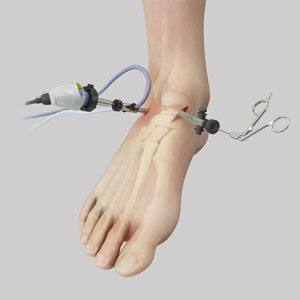
Surgery is the last resort for the management of orthopedic conditions and is indicated only if conservative techniques are not helpful. Surgery is performed to repair torn tendons and ligaments or to realign broken bones. Your surgeon may recommend a minimally invasive arthroscopic procedure or an open technique with a larger incision to treat your condition. The minimally invasive arthroscopic surgery is performed through tiny incisions, about 1 cm each, with an arthroscope - a small fiber-optic viewing instrument with a tiny lens, light source, and video camera on its end. The camera attached to the arthroscope displays the image of the joint on a monitor, allowing your surgeon to determine the extent and type of damage. Miniature surgical instruments are then inserted through the other incisions to carry out the required repair.
Some of the common orthopedic surgeries performed for treating an orthopedic condition include:
- Total Knee Replacement: Total , also called total knee arthroplasty, is a surgical procedure in which the worn-out or damaged surfaces of the knee joint are removed and replaced with an artificial prosthesis. Total knee replacement surgery is commonly indicated for severe osteoarthritis of the knee.
- Total Hip Replacement: Total hip replacement is a surgical procedure in which the damaged cartilage and bone are removed from the hip joint and replaced with artificial components. Total hip replacement surgery is commonly indicated for severe osteoarthritis of the hip.
- Anterior Cruciate Ligament (ACL) Reconstruction: Anterior cruciate ligament (ACL) reconstruction is a surgical procedure to replace the torn or damaged ACL ligament in your knee with a new ACL tissue graft obtained most commonly from your own body (autograft) or in rare cases from a deceased donor (allograft). The anterior cruciate ligament (ACL) is one of the major stabilizing ligaments in the knee. When this ligament tears, unfortunately, it does not heal on its own and often leads to the feeling of instability in the knee, requiring reconstruction to correct the abnormality.
- Rotator Cuff Surgery: A rotator cuff is a group of tendons in the shoulder joint providing support and enabling a wide range of motion. Major injury to any of these tendons may result in a tear. Rotator cuff surgery is a surgical procedure to repair an injured or torn rotator cuff.
- Hand and Wrist Surgeries: As the hands and wrists are utilized so often in day-to-day activities, they are susceptible to damage through injuries, wear and tear, and arthritis. Fractures and dislocations to the hand or fingers, wrist, tendonitis, and carpal tunnel syndrome are some of the deformities that can be corrected with orthopedic surgery.
- Foot and Ankle Surgeries: The foot and ankle are complex joints involved in movement, and providing stability and balance to the body. They are flexible structures that consist of 26 bones, 33 joints, and many muscles, tendons and ligaments. Foot and ankle surgeries are procedures performed to treat foot and ankle structures with deformities, injuries, structural issues, and damage from diseases like diabetes or arthritis.
- Bone Fracture Repair: Orthopedic surgery is commonly employed to treat fractures where the bone/bone fragments are reduced or repositioned into their normal alignment. Orthopedic implants such as wires, nails, plates, and screws are then used to secure the damaged bones together. This method is commonly utilized for managing fractures such as a broken leg, rib, hip, collar bone, or ankle.
Why Choose All American Orthopedic Surgeons for Orthopedic Surgery in Houston, Lake Jackson & Kingwood?
Orthopedic surgery can provide lasting relief when chronic pain, injuries, or degenerative joint conditions no longer respond to conservative treatment. At All American Orthopedic & Sports Medicine Institute, our fellowship-trained orthopedic surgeons offer comprehensive surgical care for patients of all ages, combining advanced technology with personalized treatment plans to help restore mobility and improve quality of life.
Patients choose our orthopedic team because we offer:
- Fellowship-trained orthopedic surgeons with specialized expertise across multiple orthopedic subspecialties
- Comprehensive evaluations using advanced diagnostic imaging
- Personalized treatment plans tailored to your condition, lifestyle, and recovery goals
- Minimally invasive, arthroscopic, robotic-assisted, and traditional surgical techniques when appropriate
- Comprehensive care from diagnosis through surgery, rehabilitation, and recovery
- Treatment for sports injuries, arthritis, fractures, spine disorders, hand conditions, pediatric orthopedic conditions, and joint replacement
- Convenient office locations in Houston (Clear Lake), Lake Jackson, and Kingwood
Our goal is to relieve pain, restore movement, and help you safely return to work, sports, and everyday activities through comprehensive orthopedic care delivered under one roof.
Orthopedic Surgery FAQs
What is orthopedic surgery?
Orthopedic surgery is the medical specialty focused on treating injuries and conditions affecting the musculoskeletal system, including bones, joints, muscles, tendons, ligaments, cartilage, and nerves. Surgery may be recommended when non-surgical treatments no longer provide adequate relief.
What conditions can orthopedic surgery treat?
Orthopedic surgery may be used to treat arthritis, fractures, sports injuries, torn ligaments, tendon injuries, joint instability, spine disorders, hand and wrist conditions, foot and ankle injuries, shoulder disorders, hip and knee conditions, and pediatric orthopedic problems.
Will I need surgery?
Not necessarily. Many orthopedic conditions improve with conservative treatments such as physical therapy, medications, bracing, injections, or activity modification. Surgery is recommended only when it offers the best opportunity to relieve pain, restore function, or prevent further joint damage.
What types of orthopedic surgery are available?
Depending on your condition, your orthopedic surgeon may recommend arthroscopic surgery, fracture repair, ligament reconstruction, tendon repair, joint replacement, spine surgery, pediatric orthopedic procedures, or other specialized surgical treatments.
How long is recovery after orthopedic surgery?
Recovery varies depending on the procedure performed, your overall health, and the severity of your condition. Some minimally invasive procedures require only a few weeks of recovery, while joint replacement or complex reconstructive surgery may require several months of rehabilitation.
Will I need physical therapy after surgery?
Yes. Physical therapy is an important part of recovery for many orthopedic procedures. Rehabilitation helps restore strength, flexibility, balance, range of motion, and overall function while supporting a safe return to normal activities.
Why choose a fellowship-trained orthopedic surgeon?
Fellowship-trained orthopedic surgeons receive advanced training in specialized areas of orthopedics beyond residency. This additional expertise allows them to provide comprehensive treatment using the latest surgical techniques and evidence-based approaches.
Schedule Your Orthopedic Surgery Consultation at All American Orthopedic & Sports Medicine Institute
Whether you're dealing with chronic joint pain, a sports injury, a fracture, or another musculoskeletal condition, the experienced team at All American Orthopedic & Sports Medicine Institute is committed to helping you achieve the best possible outcome. From advanced diagnostics and conservative care to minimally invasive procedures and complex orthopedic surgery, we provide comprehensive treatment designed around your individual needs.
With convenient locations in Houston (Clear Lake), Lake Jackson, and Kingwood, expert orthopedic care is always close to home. Contact All American Orthopedic & Sports Medicine Institute today to schedule your consultation and learn more about your personalized orthopedic treatment and surgical options.