
Golfer's elbow can cause persistent pain and tenderness on the inside of the elbow, making gripping, lifting, and everyday tasks uncomfortable. At All American Orthopedic & Sports Medicine Institute, our fellowship-trained orthopedic surgeons provide comprehensive treatment for golfer's elbow using personalized non-surgical and surgical care when needed. Serving Houston, Clear Lake, Lake Jackson, and Kingwood, we focus on relieving pain, restoring strength, and helping you safely return to work, sports, and daily activities.
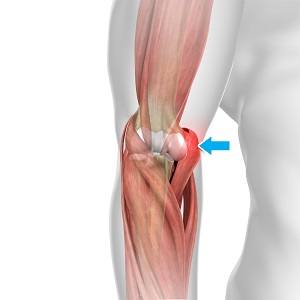
What is Elbow Anatomy?
The elbow is a joint made up of three bones: the upper arm bone, the humerus, and the two forearm bones, the radius and ulna. The lower end of the humerus has bony bumps called epicondyles that serve as sites of attachment for major tendons and muscles that help in arm movement. The bump on the inside of the elbow is called the medial epicondyle. It helps in the attachment of the tendons and muscles that help extend your fingers and wrist.
What is Golfer’s Elbow?
Golfer’s elbow, also called medial epicondylitis, is a painful condition occurring from repeated muscle contractions in the forearm that leads to inflammation and microtears in the tendons that attach to the medial epicondyle.
Golfer’s elbow and tennis elbow are similar, except that golfer’s elbow occurs on the inside of the elbow and tennis elbow occurs on the outside of the elbow. Both conditions are a type of tendonitis - inflammation of the tendons.
What Causes Golfer’s Elbow?
Golfer’s elbow is usually caused by the overuse of the forearm muscles and tendons that control wrist and finger movement, but may also be caused by direct trauma such as a fall, car accident or work injury.
Golfer’s elbow is commonly seen in golfers; hence the name. It occurs especially when poor technique or unsuitable equipment is used when hitting the ball. Other common causes include any activity that requires repetitive motion of the forearm such as painting, hammering, typing, raking, pitching sports, gardening, shoveling, fencing and playing golf.
What are the Signs and Symptoms of Golfer’s Elbow?
The signs and symptoms of golfer’s elbow can include the following:
- Elbow pain that appears suddenly or gradually
- Achy pain to the inner side of the elbow during activity
- Elbow stiffness with decreased range of motion
- Pain that radiates to the inner forearm, hand or wrist
- Weakened grip
- Increased pain while gripping objects
- Increased pain in the elbow when the wrist is flexed or bent forward toward the forearm
How is Golfer’s Elbow Diagnosed?
Your doctor will review your medical history and perform a thorough physical examination of your elbow joint. Your physician may order an X-ray to rule out a fracture or arthritis as the cause of your pain. Occasionally, if the diagnosis is unclear, further tests such as MRI, ultrasonography and injection test may be ordered to confirm golfer’s elbow.
What are the Treatment Options for Golfer’s Elbow?
Conservative Treatment Options for Golfer’s Elbow
Your physician will recommend conservative treatment options to treat the symptoms associated with golfer’s elbow. These may include the following:
- Activity restrictions: Limit the use and rest your arm from activities that worsen symptoms.
- Orthotics: Splints or braces may be ordered to decrease stress on the injured tissues.
- Ice: Ice packs applied to the injury will help reduce swelling and pain. Ice should be applied over a towel to the affected area for 20 minutes, four times a day for a couple of days. Never place ice directly over the skin.
- Medications: Anti-inflammatory medications and/or steroid injections may be ordered to treat the pain and swelling.
- Occupational therapy: OT may be ordered for strengthening and stretching exercises once your symptoms have reduced.
- Pulsed ultrasound: This is a treatment used by therapists to break up scar tissue and increase blood flow to the injured tendons and promote healing.
- Professional instruction: Consulting a sports professional to assess and instruct in proper swing technique and appropriate equipment may be recommended to prevent recurrence.
Surgery for Golfer’s Elbow
If conservative treatment options fail to resolve the condition and symptoms persist for 6 - 12 months, your surgeon may recommend surgery to treat golfer’s elbow. The goal of surgery is to remove the diseased tissue around the inner elbow, improve blood supply to the area to promote healing and alleviate the symptoms.
Why Choose All American Orthopedic Surgeons for Golfer's Elbow Treatment in Houston, Lake Jackson & Kingwood?
Golfer's elbow, also known as medial epicondylitis, is an overuse injury that affects the tendons on the inside of the elbow. Although commonly associated with golf, the condition frequently affects people whose jobs or recreational activities involve repetitive gripping, lifting, or wrist movements. At All American Orthopedic & Sports Medicine Institute, our fellowship-trained orthopedic surgeons provide comprehensive evaluation and individualized treatment plans to relieve pain and restore elbow function.
Patients choose our orthopedic team because we offer:
- Fellowship-trained orthopedic surgeons with expertise in sports medicine and upper extremity conditions
- Comprehensive evaluations to accurately diagnose the source of elbow pain
- Advanced diagnostic imaging when appropriate
- Personalized treatment plans based on your symptoms, activity level, and goals
- Conservative treatment options, including physical therapy, bracing, medications, activity modification, and injection therapy when appropriate
- Advanced surgical treatment for chronic cases that do not improve with non-surgical care
- Convenient office locations in Houston (Clear Lake), Lake Jackson, and Kingwood
Our goal is to relieve pain, restore strength and flexibility, and help you return to work, sports, and everyday activities with lasting results.
Golfer's Elbow FAQs
What is golfer's elbow?
Golfer's elbow, or medial epicondylitis, is an overuse injury that causes inflammation and degeneration of the tendons attached to the inside of the elbow. The condition develops from repetitive gripping, wrist flexion, or forearm motions and is not limited to golfers.
What causes golfer's elbow?
Golfer's elbow is commonly caused by repetitive activities such as golfing, racquet sports, weightlifting, throwing sports, construction work, painting, typing, or using hand tools. Any activity that repeatedly stresses the forearm muscles and tendons may contribute to the condition.
What are the symptoms of golfer's elbow?
Common symptoms include pain and tenderness on the inside of the elbow, stiffness, weak grip strength, pain that radiates into the forearm, and discomfort when lifting, gripping, or twisting objects.
How is golfer's elbow diagnosed?
Your orthopedic surgeon will perform a physical examination, review your symptoms and activity history, and may recommend imaging studies such as X-rays or MRI if another condition is suspected or symptoms persist despite treatment.
Can golfer's elbow be treated without surgery?
Yes. Most patients improve with conservative treatment, including rest, activity modification, physical therapy, anti-inflammatory medications, bracing, and injection therapy when appropriate. Surgery is generally considered only after several months of unsuccessful non-surgical treatment.
When is surgery recommended?
Surgery may be recommended if chronic pain and reduced function continue despite comprehensive conservative treatment. The procedure typically involves removing damaged tendon tissue and repairing healthy tendon to improve elbow function.
How long does recovery take?
Recovery depends on the severity of the condition and the treatment received. Many patients experience improvement within several weeks to months with non-surgical care. Recovery after surgery typically includes physical therapy and gradual return to normal activities over several months.
Find Lasting Relief from Golfer's Elbow at All American Orthopedic & Sports Medicine Institute
If persistent elbow pain is interfering with your work, sports, or everyday activities, the experienced orthopedic team at All American Orthopedic & Sports Medicine Institute is here to help. We provide comprehensive evaluation and personalized treatment for golfer's elbow, using advanced non-surgical therapies and surgical care when necessary to restore strength, reduce pain, and improve function.
With convenient locations in Houston (Clear Lake), Lake Jackson, and Kingwood, expert orthopedic care is always close to home. Contact All American Orthopedic & Sports Medicine Institute today to schedule your consultation and learn more about your treatment options for golfer's elbow.