
If chronic knee pain is limiting your mobility and quality of life, All American Orthopedic & Sports Medicine Institute offers advanced muscle-sparing total knee replacement to help you move with greater comfort and confidence. Our fellowship-trained orthopedic surgeons use modern surgical techniques designed to preserve healthy soft tissues whenever possible while restoring knee function. Serving Houston, Clear Lake, Lake Jackson, and Kingwood, we provide personalized care focused on lasting pain relief, improved mobility, and a smoother recovery.
What is Muscle-Sparing Total Knee Replacement?
A total Knee Replacement surgery involves replacing the damaged surfaces of the articulating bones with artificial implants to relieve pain and restore function in the knee that is damaged by arthritis or an injury.
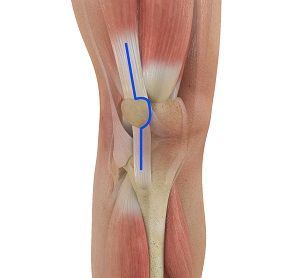
Muscle-sparing total Knee Replacement is a minimally invasive surgical approach that involves making a smaller incision of 4 to 6 inches in length as compared to a larger incision of 10 to 12 inches used in the traditional knee replacement and spares the quadriceps muscle and tendon, which control bending of the knee, from being cut to access the knee joint.
The quadriceps muscles are the muscles located in front of the thigh. The quadriceps tendon is a thick tissue located at the top of the kneecap. It works together with the quadriceps muscles to allow us to straighten our legs.
The smaller incision with minimally invasive surgery means fewer tissues are cut resulting in quicker healing and recovery. The advantages of muscle-sparing total Knee Replacement over traditional knee replacement include:
- Minimal surgical dissection
- Shorter recovery period
- Shorter hospital stay
- Reduced post-operative pain
- Minimal blood loss
- Smaller surgical scar
What is Anatomy of the Knee Joint?
The lower end of the thighbone, or femur, meets the upper end of the shinbone, or tibia, at the knee joint. A small disc of bone called the patella, commonly known as the kneecap, rests on a groove on the front side of the femoral end. The bones are held together by protective tissues, ligaments, tendons, and muscles. Synovial fluid within the joint aids in the smooth movement of the bones over one another. The meniscus, a soft crescent-shaped area of cartilage between the femur and tibia, serves as a cushion and helps absorb shock during motion.
What are the Indications for Muscle-Sparing Total Knee Replacement?
Muscle-sparing total Knee Replacement surgery is commonly indicated for severe osteoarthritis of the knee. Osteoarthritis is the most common form of knee arthritis in which the joint cartilage gradually wears away. It often affects older people.
In a normal joint, articular cartilage allows for smooth movement within the joint, whereas in an arthritic knee the cartilage itself becomes thinner or completely absent. In addition, the bones become thicker around the edges of the joint and may form bony “spurs.” All of these factors can cause pain and restricted range of motion in the joint.
Your doctor may advise muscle-sparing total Knee Replacement if you have:
- Severe knee pain that limits your daily activities (such as walking, getting up from a chair, or climbing stairs).
- Chronic knee inflammation and swelling
- Knee deformity with loss of cartilage and pain
- Injury or fracture of the knee
- Instability of the knee
- Moderate to severe pain that occurs during rest or awakens you at night
- Failure of the non-surgical treatment options such as medications, injections and physical therapy to relieve symptoms
How is Muscle-Sparing Total Knee Replacement Performed?
Muscle-sparing total Knee Replacement surgery is performed under regional or general anesthesia and involves the following steps:
- You will be lying on your back on the operating table with a tourniquet applied to your upper thigh to reduce blood loss.
- Your surgeon will then make a 4-6 inch incision along the affected knee to expose the knee joint. The quadriceps muscle and tendon are moved aside to access the joint.
- The surgeon first focuses on the femur (thighbone). The damaged portions of the femur are cut at the appropriate angles using specialized tools.
- Then the femoral component is attached to the end of the femur with or without bone cement. The next step involves removal of the damaged area of the tibia (shinbone) and the cartilage. It allows for a smooth surface to which implants can be attached.
- The tibial component is then secured to the end of the bone using bone cement or screws. Your surgeon will place a plastic piece called an articular surface between these implants to ensure a smooth gliding movement.
- This plastic insert acts in a similar way as the original articular cartilage and helps in supporting your body weight as well as allows the femur bone to move over the tibia. The femur and the tibia bone with their new components are put together to form the new knee joint.
- To ensure that the patella (kneecap) glides smoothly over the new artificial knee, its rear surface is prepared to receive a plastic component. With all its new components in place, the knee joint is examined through its range of motion.
- All excess cement will be removed, and the entire joint will be irrigated or cleaned out with a sterile saline solution.
- The incision is then closed and drains are usually inserted. A surgical dressing or bandage is then placed over the incision.
What Does Postoperative Care for Muscle-Sparing Total Knee Replacement Involve?
In general, postoperative care instructions and recovery after muscle-sparing total Knee Replacement surgery will involve the following:
- You will be transferred to the recovery area where your nurse will closely observe you for any allergic or anesthetic reactions and monitor your vital signs as you recover.
- You may notice pain, swelling, and discomfort in the knee area. Pain and anti-inflammatory medications are provided as needed.
- You are advised to keep your leg elevated while resting to prevent swelling and pain.
- You will be given assistive devices such as crutches with instructions on restricted weight-bearing for a specified period of time. You are encouraged to walk with assistance as frequently as possible to prevent blood clots.
- Keep the surgical site clean and dry. Instructions on surgical site care and bathing will be provided.
- Refrain from smoking as it can negatively affect the healing process.
- Eating a healthy diet rich in vitamin D is strongly advised to promote healing and a faster recovery.
- Refrain from strenuous activities for the first few months and lifting heavy weights for at least 6 months. Gradual increase in activities over a period of time is recommended.
- An individualized physical therapy protocol will be designed to help strengthen knee muscles and optimize knee function.
- Most patients are able to resume their normal activities in a month or two after surgery; however, return to sports may take at least 6 months or longer.
- Refrain from driving until you are fully fit and receive your doctor’s consent.
- A periodic follow-up appointment will be scheduled to monitor your progress.
What are the Risks and Complications of Muscle-Sparing Total Knee Replacement?
Muscle-sparing total Knee Replacement surgery is a relatively safe procedure; however, as with any surgery, some risks and complications may occur, such as the following:
- Blood clots
- Infection
- Bleeding
- Anesthetic/allergic reactions
- Injury to nerves and blood vessels
- Implant wear and loosening
- Failure to relieve knee pain or stiffness
- The need for revision surgery
Why Choose All American Orthopedic Surgeons for Muscle-Sparing Total Knee Replacement in Houston, Lake Jackson & Kingwood?
Living with severe knee pain can make everyday activities such as walking, climbing stairs, standing for long periods, or enjoying your favorite hobbies increasingly difficult. At All American Orthopedic & Sports Medicine Institute, our fellowship-trained orthopedic surgeons specialize in muscle-sparing total knee replacement using advanced surgical techniques designed to relieve pain, restore mobility, and help patients return to an active lifestyle.
Patients choose our orthopedic team because we offer:
- Fellowship-trained orthopedic surgeons specializing in knee replacement surgery
- Advanced muscle-sparing surgical techniques designed to minimize disruption to surrounding muscles and soft tissues whenever appropriate
- Personalized treatment plans based on your anatomy, lifestyle, and recovery goals
- Comprehensive evaluations to determine whether knee replacement is the right treatment option
- Modern surgical technology and evidence-based orthopedic care
- Coordinated rehabilitation programs to optimize strength, mobility, and recovery
- Convenient office locations in Houston (Clear Lake), Lake Jackson, and Kingwood
Our goal is to reduce chronic knee pain, improve joint function, and help you safely return to the activities that matter most through compassionate, patient-centered orthopedic care.
Muscle-Sparing Total Knee Replacement FAQs
What is muscle-sparing total knee replacement?
Muscle-sparing total knee replacement is an advanced surgical approach that replaces the damaged surfaces of the knee while minimizing disruption to the surrounding muscles and soft tissues whenever possible. This approach may help support an earlier recovery while providing the same goal of long-term pain relief and improved function.
Who is a candidate for muscle-sparing knee replacement?
You may be a candidate if you have severe knee arthritis or significant joint damage that has not improved with conservative treatments such as medications, injections, physical therapy, activity modification, or bracing. Your orthopedic surgeon will determine whether a muscle-sparing approach is appropriate for your specific condition.
What conditions are treated with muscle-sparing knee replacement?
Muscle-sparing total knee replacement is most commonly performed for advanced osteoarthritis but may also be recommended for rheumatoid arthritis, post-traumatic arthritis, or other conditions that cause severe joint damage and chronic knee pain.
What are the benefits of a muscle-sparing approach?
Compared with traditional techniques, muscle-sparing approaches are designed to preserve healthy muscles and tendons whenever possible. Potential benefits may include less postoperative discomfort, earlier mobility, shorter rehabilitation, and a faster return to daily activities for appropriate candidates. Individual results vary.
How long does recovery take?
Recovery varies for every patient. Many patients begin walking with assistance shortly after surgery and participate in physical therapy soon afterward. Most continue improving over several months as strength, flexibility, and knee function return.
Will I need physical therapy?
Yes. Physical therapy is an essential part of recovery following knee replacement surgery. Rehabilitation helps improve range of motion, strengthen the surrounding muscles, restore balance, and maximize the long-term success of your new knee.
How long does a knee replacement last?
Modern knee implants are designed for long-term durability. Many contemporary knee replacements continue to function well for 15 years or longer, although longevity depends on factors such as activity level, overall health, weight, and implant type.
Regain Your Mobility with Muscle-Sparing Total Knee Replacement
Don't let chronic knee pain prevent you from enjoying the life you love. The experienced orthopedic team at All American Orthopedic & Sports Medicine Institute provides advanced muscle-sparing total knee replacement using modern surgical techniques and personalized treatment plans designed to relieve pain, improve mobility, and restore knee function.
With convenient locations in Houston (Clear Lake), Lake Jackson, and Kingwood, expert orthopedic care is always close to home. Contact All American Orthopedic & Sports Medicine Institute today to schedule your consultation and learn whether muscle-sparing total knee replacement is the right solution for your knee pain.